Self sufficiency is one of the most glamorous (to us) features of boat life. We look forward to the day that we can travel the world under wind power, take our food and water from the abundance of the ocean (well the water anyway, the fish will be a bonus) and draw our electrical power from the sun. As we prepare for our trip each thing that we have purchased and installed that helps the boat to sail better and safer has received a little emotional boost from the incidental fulfillment of the self-sufficiency goal.
This weekend I completed the 2nd—and perhaps most important—step in our off-the-grid goal; 420 Watts of Solar power is now bolted to our boat. The path to this solution was a long and arduous one. I started out looking at one giant panel that would rest on our dodger. Later, when I realized how easily it would be shaded, I changed my thinking to two large dodger mounted panels. It wasn’t until I started talking with Rob Tryon of Southbound Solar that I came around to the solution we have now. I had called Rob because I heard through the grapevine that he had a lot of panels that he had tested and was selling cheap. As it turned out, the system that he was selling “The Mariner’s Package” was great, but well below my robust desires.
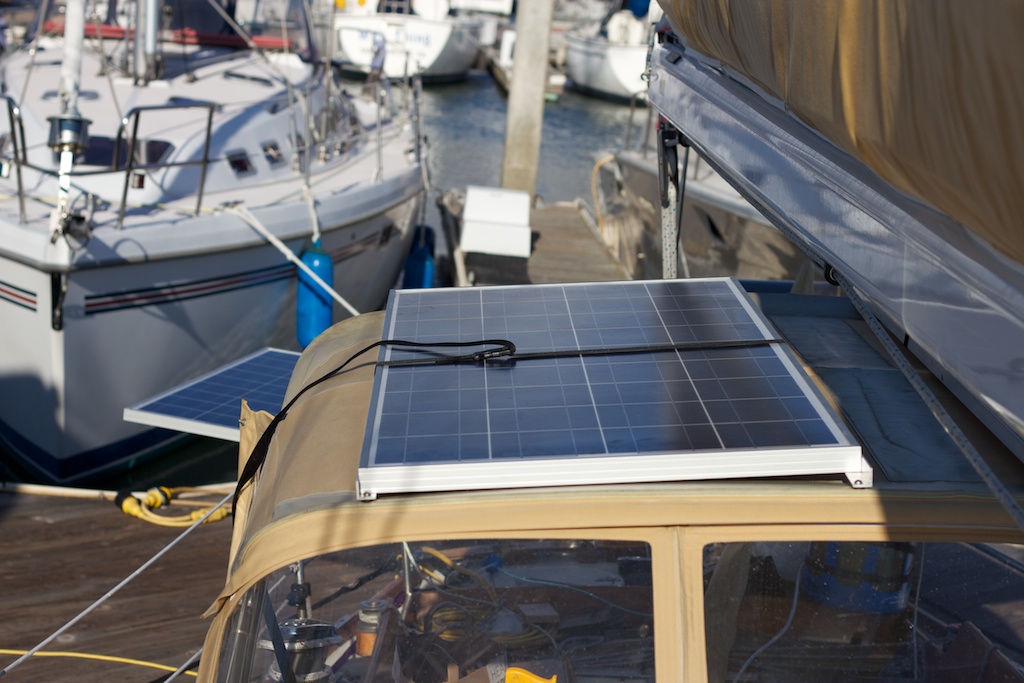
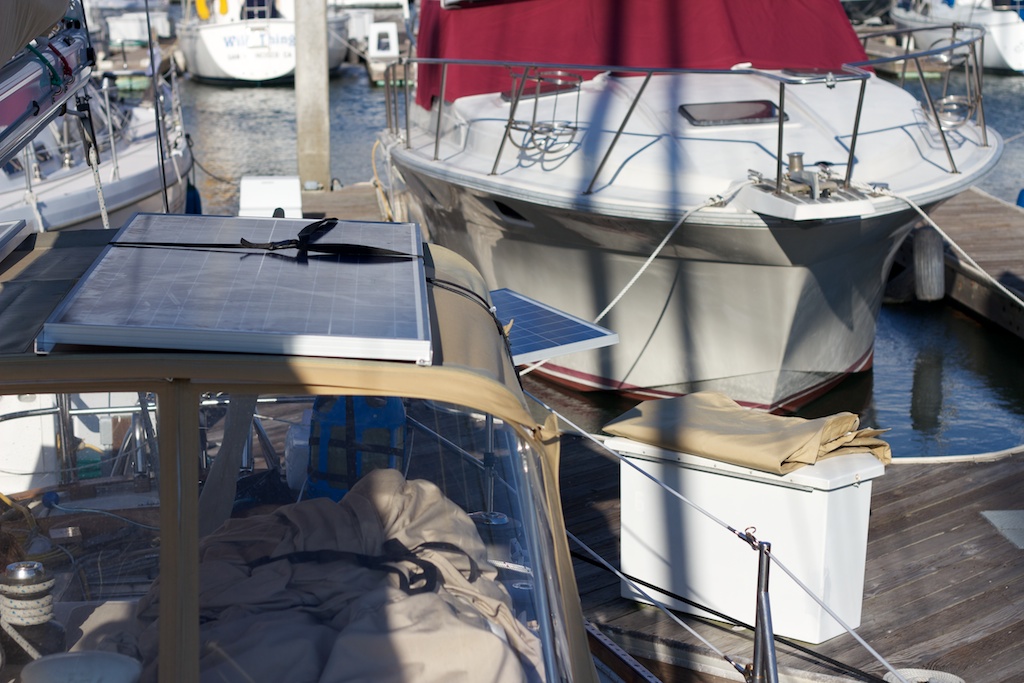
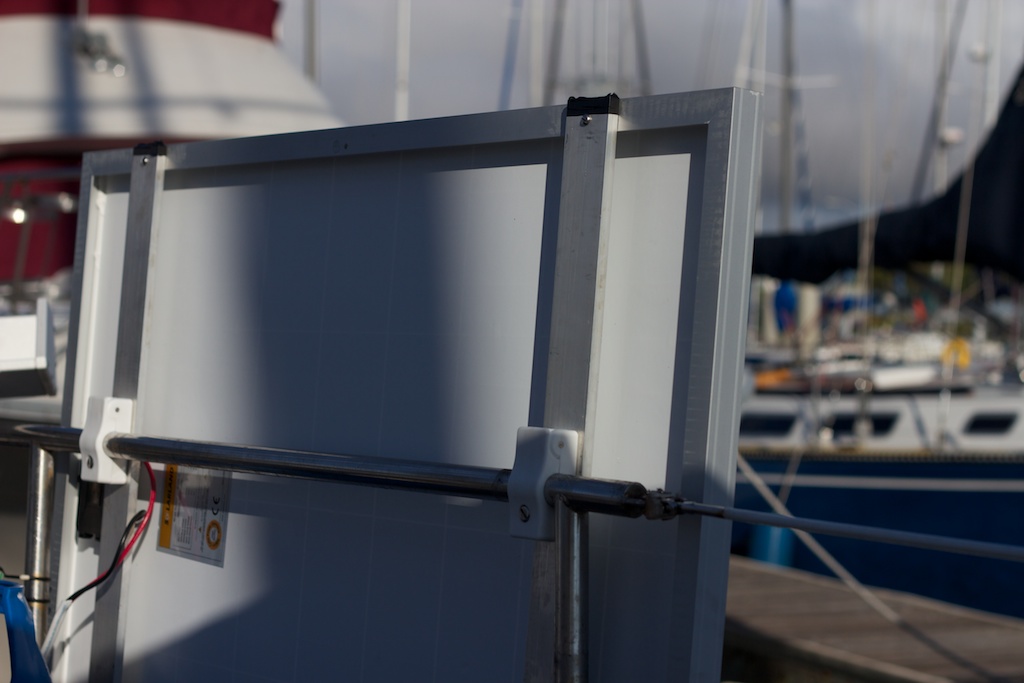
Rob visited us on Convivia and together (between swapping yarns) we worked out a better system. Rob’s idea was to separate the system into two autonomous parts. The first part consists of two 80 Watt Solar Land panels mounted in a traditional stern pulpit configuration. These panels are tied together (in parallel) before going into a Flexcharge NC25A charge controller. The second bank is a pair of dodger mounted 120 Watt panels tied together and fed into another NC25A. The outputs of these controllers are then paralleled at the ship’s positive bus and a sensor cable (for charge monitoring) is connected from the battery to a small serial bus that the two controllers share.
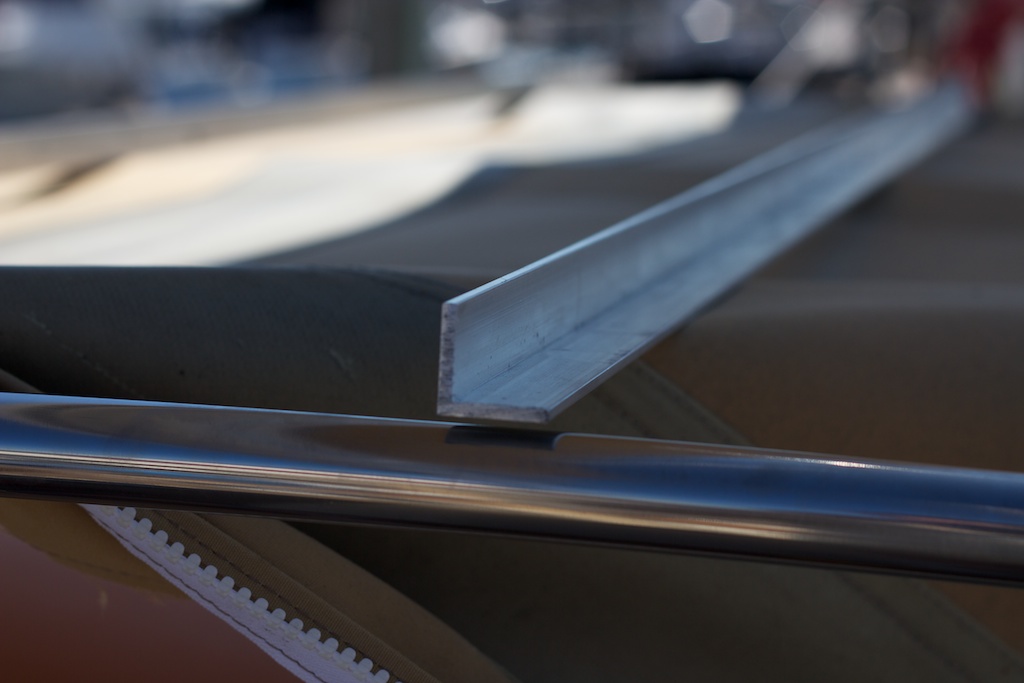
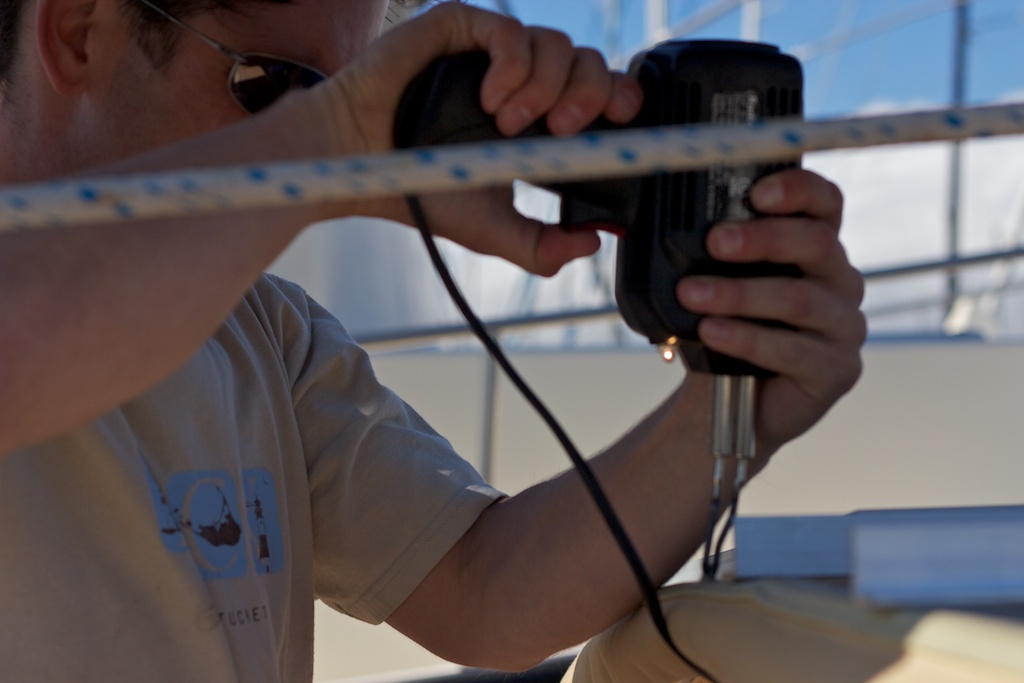
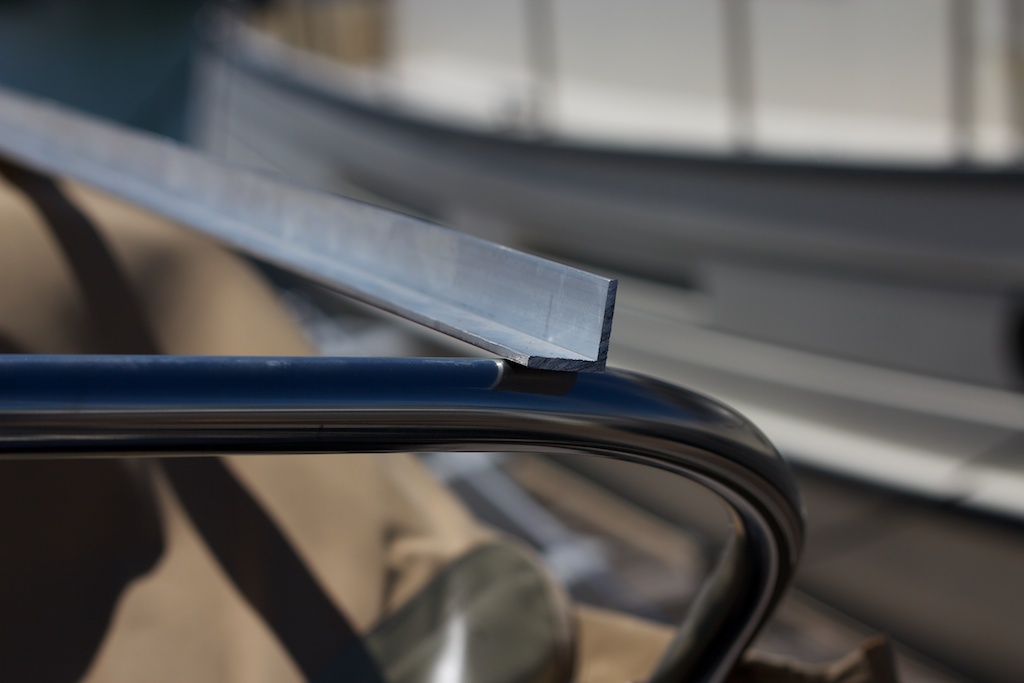
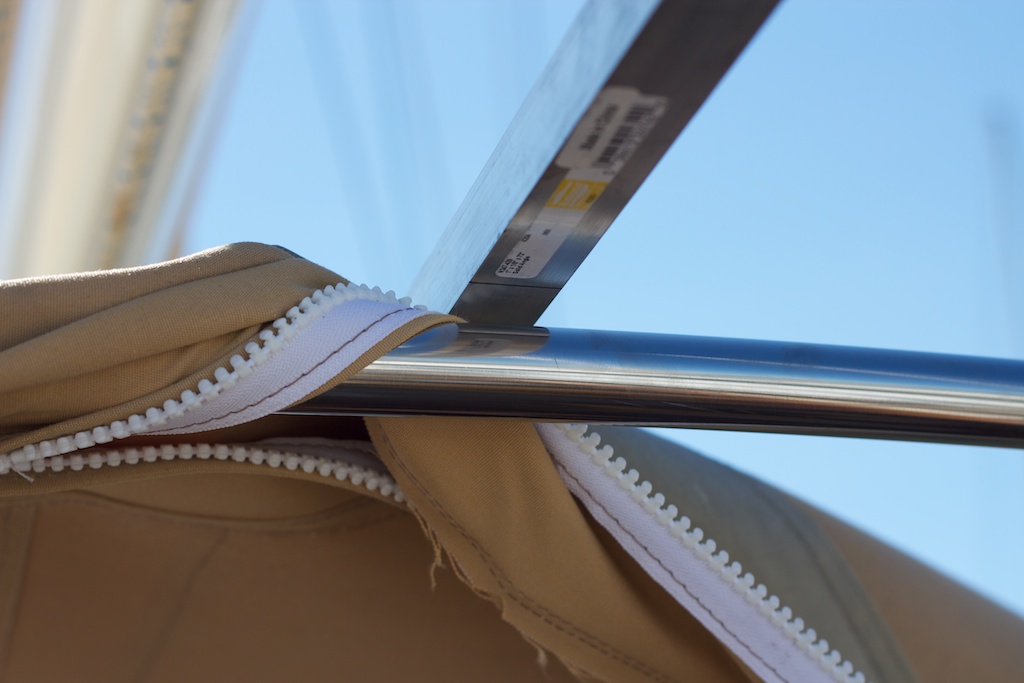
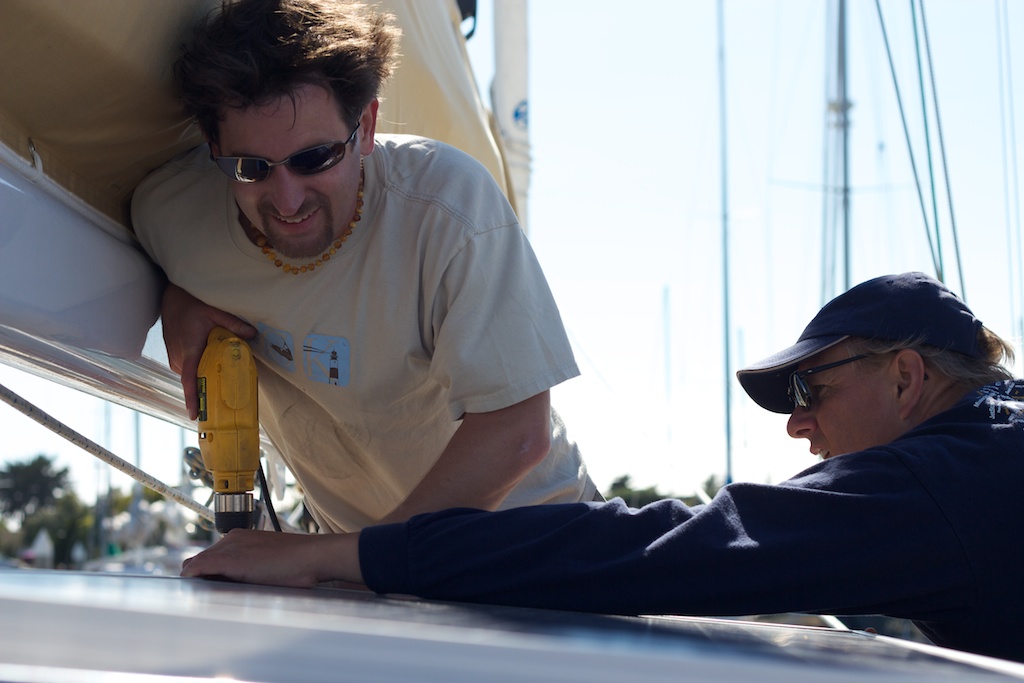
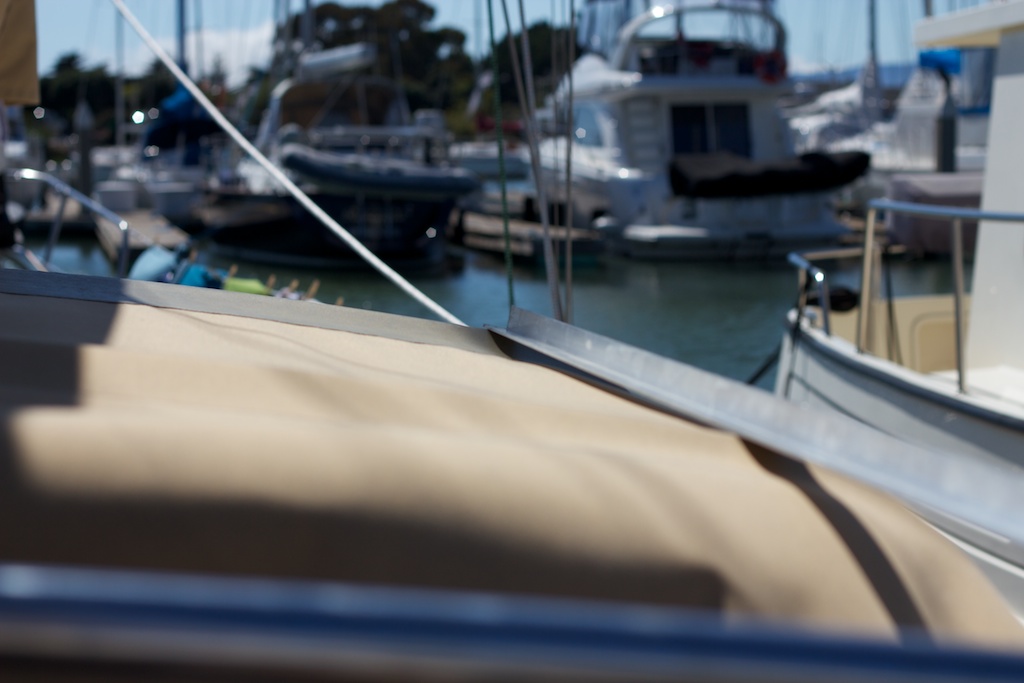
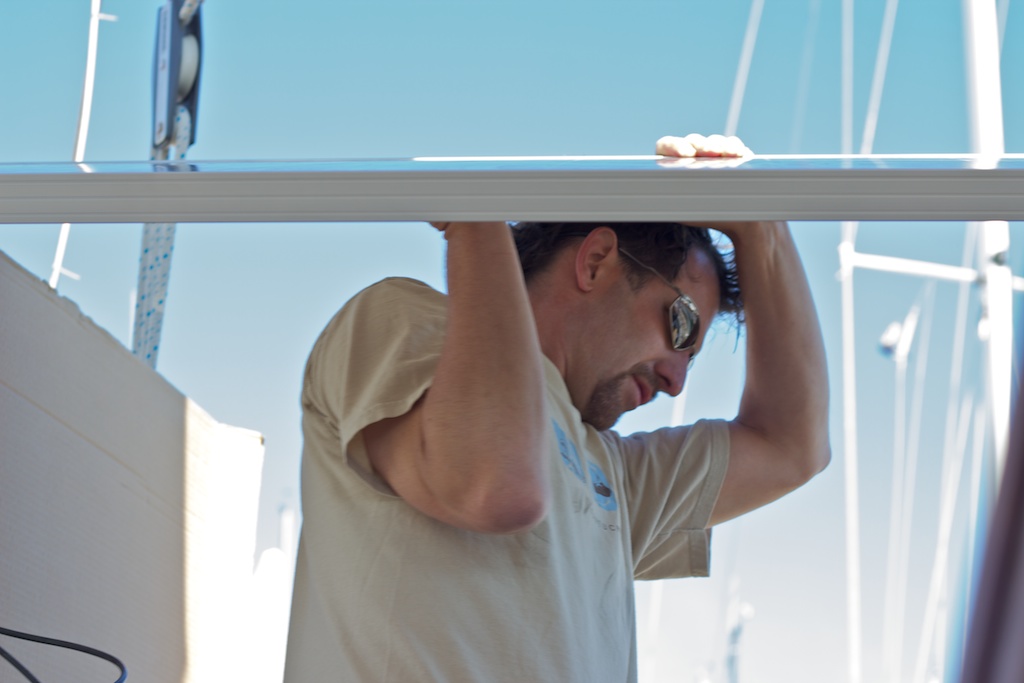
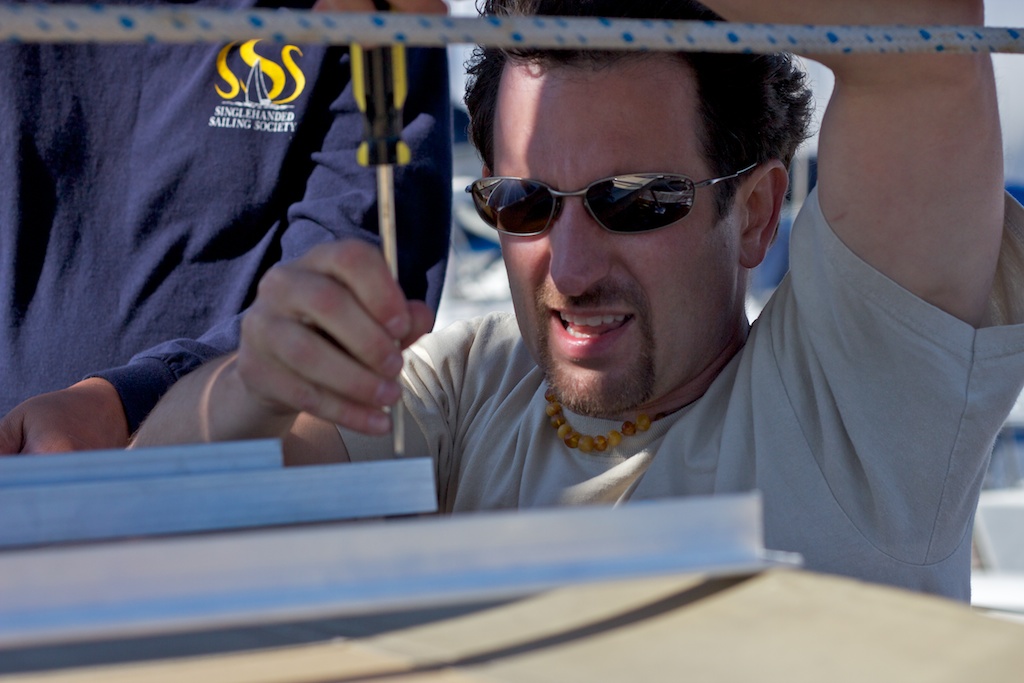
I thought that the physical install was going to be the tough part, and it was. Finding the right aluminum bar stock (3/8" x 2") for the pulpit mounts was a trick (hint: Alco Metals). But the real fancy part was installing the dodger mounted ones. That, in the end, was done with L profile 1"x 1/4" aluminum stock. I used two pieces per panel to form a bracket. Once I had the panels and brackets laid out, I drilled the corner holes one at a time (replacing the Sunbrella between each iteration) so that I would never have more than about a third of the dodger disassembled at a time. This was important because the dodger looses it’s shape without the fabric, and you can’t drill through the fabric without shredding it. Rob actually showed up part way through this project to lend a hand, and stayed until the frame was almost complete. That night I strapped the whole thing together with webbing and went to bed feeling “almost done.”
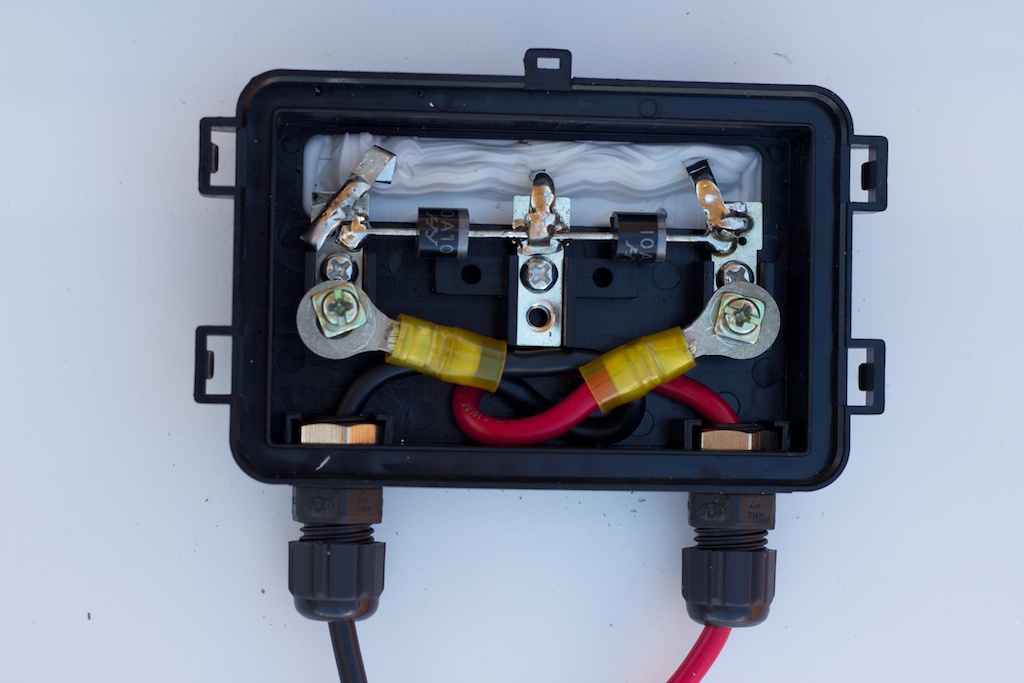
Ha! Even though the physical mounting only took another couple of hours, the electrical part was savage. I had to drill holes in the afterdeck and cabin top; weatherize those holes; run nearly 75’ of 10 guage duplex wire, with two 2-into-1 splices, 4 quick connect, and who knows how many ring terminals. There were some interesting challenges with the 2-into-1 splices too. The stern system was easy. I used the old nut and bolt trick; staggering the positive and negative leg by a few inches and zip tied together. I looked great and I’m pretty sure they will be bullet-proof (as these things go). The dodger mount splice was going to have to rest in close proximity to a 1" stainless steel tube. I’m not terribly happy with my solution, so I’ll wait until it’s proven one way or another before I describe it. I can at least say that it works :)
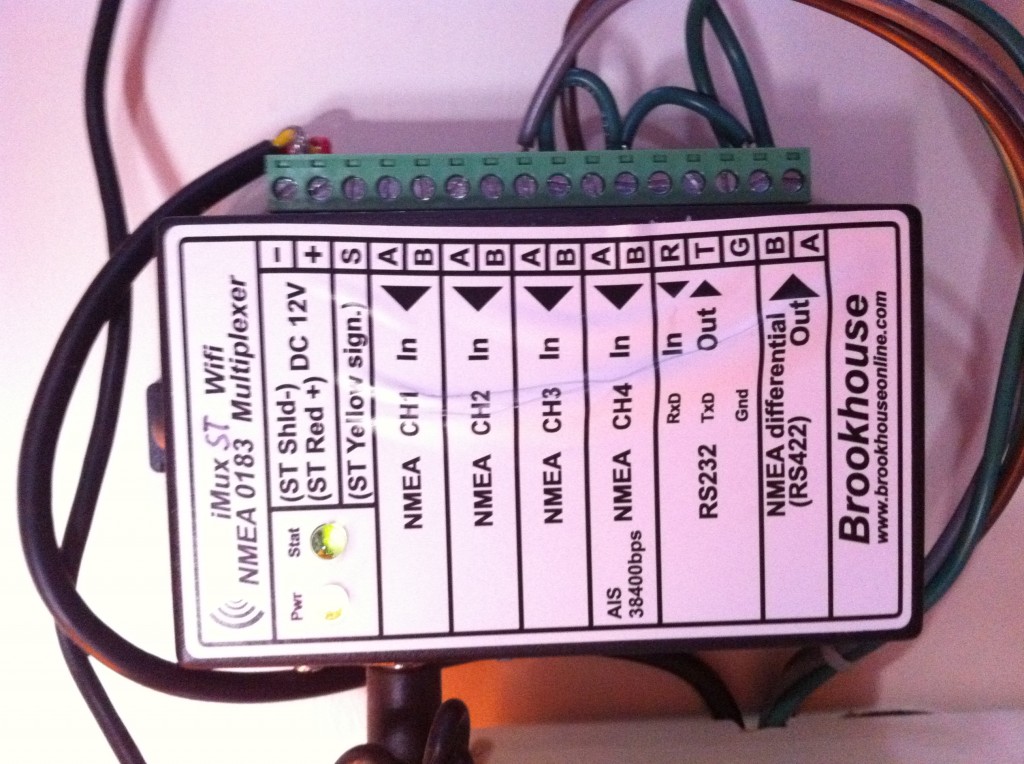
Without going into all of the gory details I’ll say that the charge controllers (which I expected to be just plug-and-play) turned out to be a full days work. Even now I’m not sure I’ll keep the system as it was specified. I am fairly sure that Rob has the theory of it right, and with his balanced system (all 80 watt panels) it works like a charm. On my system though, it took forever to get them to stop tripping each other (they have a high voltage/low voltage trigger). One would turn on, then the other would. Then the voltage (of the pair) would spike up to 15+v and they would both shut down, bringing the system voltage to ~13.4v where they would both pop on again, spike and divert. By the end of the day I was able to get them to trigger in a slightly out of phase way that would avert the spike and keep both arrays in the game. I do think the charge controllers are good (maybe even awesome) and that a balanced system would work swimmingly, but I may end up just using one (and keeping a warm spare) as my total output is just in the neighborhood of their rated output (25amps). I’ll write more about that as it develops.
So now I am taking all of my DC from the sun. Tonight I am running a full compliment of DC appliances (including both of our 2amp bulkhead lamps) and tomorrow we’ll see if the batteries are charged when we get back to the boat. Once we have a good sense of our capabilities, we’ll start experimenting with the inverter. I can say that today, at 2pm I saw 22 amps coming in from the sun, and that feels an awful lot like self-sufficiency!